
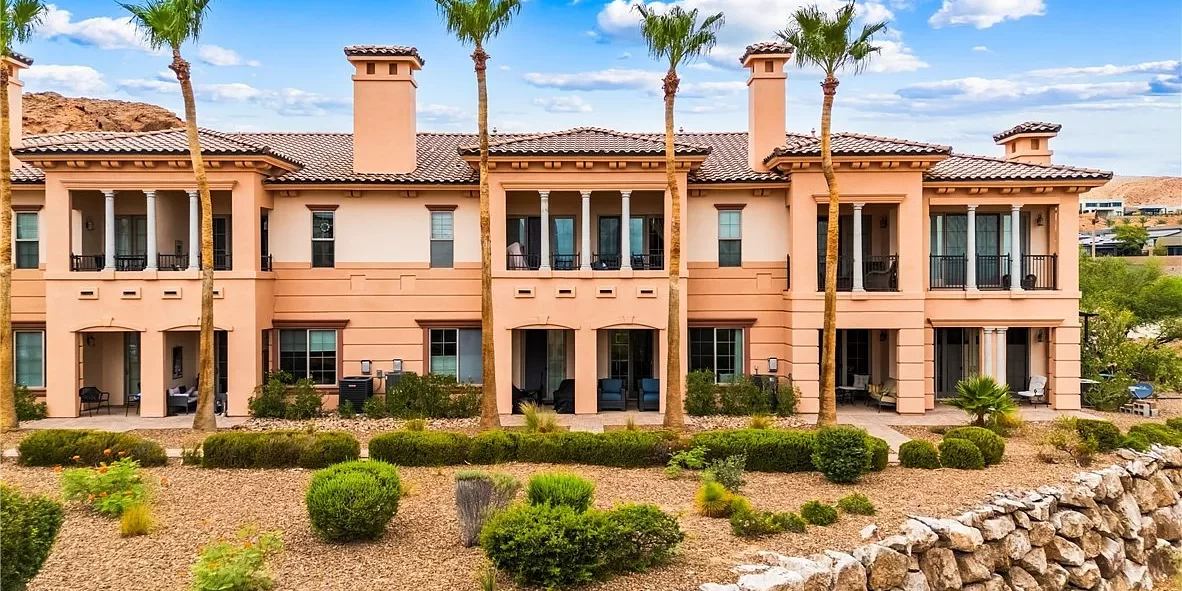
A new home may offer opportunities to select finishes and start with new systems. An existing property lets you evaluate a completed layout, outdoor areas, and surrounding homes in person. Neither option wins automatically. The goal is to compare specific properties on the same terms.
Start With the Different Types of Homes Available
Lake Las Vegas’s official new-home directory includes communities such as Incanta Lago by Toll Brothers, Portofino by Taylor Morrison, and Shoreline by Blue Heron. Treat it as a starting point, not a guarantee of current lot availability, completion dates, or pricing. Confirm the details of the particular home you want to consider.
For a useful comparison, distinguish among three purchase types:
- A home not yet built: You evaluate a proposed home, available lot, specifications, and construction timeline.
- A builder’s inventory home: Construction may be underway or complete, with some or all design decisions already made.
- A resale home: You evaluate an existing owner’s property, its condition, included features, and negotiated sale terms.
Cynthia’s Lake Las Vegas new-home development page offers another starting point for discussing which options belong on your tour list.
Compare the Finished Cost, Not Just the Starting Price
What to Price With a New Home
Request a written breakdown for the actual lot and floor plan you are considering. Identify the base price, lot premium, structural options, design selections, and any additional required charges. Ask which features shown in the model are standard and which are upgrades.
Then price what you would need after closing. Depending on the home and purchase agreement, that might include window coverings, landscaping, appliances, storage improvements, or outdoor living features. Verify each item instead of assuming that the model’s appearance is included in the advertised price.
What to Price With a Resale Home
For an existing property, start with the proposed purchase price and add the work you genuinely plan to complete. Obtain estimates for meaningful repairs or renovations rather than assigning a casual allowance. Also confirm which appliances, furnishings, and fixtures will remain through the written agreement.
A finished yard or attractive kitchen can be useful only if it suits your needs and is in appropriate condition. Conversely, an older finish is not automatically a reason to remodel. Compare the cost of living with it, refreshing it, and replacing it before choosing.
Evaluate Builder Incentives Alongside Financing Costs
When a builder advertises an incentive, ask which homes qualify, what deadlines apply, and whether the offer depends on using a particular lender or closing provider. Get the terms in writing. Distinguish a purchase-price reduction from a closing-cost credit, an upgrade allowance, or a mortgage-rate incentive.
The Consumer Financial Protection Bureau recommends comparing Loan Estimates, including interest rates, upfront lender charges, credits, monthly payments, and cash to close. Use comparable loan terms and ask lenders to explain differences rather than choosing by the advertised payment alone.
For any temporary payment reduction, request a written payment schedule for the full period, including the payment after the reduction ends. Evaluate a resale seller’s proposed credit just as carefully. Neither a promotion nor a concession replaces a full cost comparison.
Match the Purchase to Your Moving Timeline
For a home under construction, ask for the expected completion window and review what the agreement says about delays, changes, deposits, and closing. Plan for the practical consequences of a later move, such as temporary housing, storage, or a gap between selling and buying.
A completed builder home may suit a tighter schedule, but confirm its actual readiness and closing conditions. With a resale property, discuss the seller’s preferred closing date and possession terms. A finished house does not automatically mean immediate occupancy.
When you also need to sell, coordinate both sides of the move before committing to major expenses. Cynthia’s guide to preparing your Lake Las Vegas home for sale can help you organize that part of the process.
Decide How Much Customization You Actually Want
For a home purchased early enough in construction, ask which choices remain available and when decisions become final. Confirm the price of each selection and the procedure for changes. Structural choices and finishes should be evaluated against how you will use the home, not just how they look in a showroom.
A quick-move-in home may offer fewer decisions because the builder has already selected features. A resale home gives you a completed starting point, with future changes subject to feasibility, cost, permits, and applicable association approvals.
Make a short list of priorities that would be difficult to change later: layout, access, lot position, usable outdoor space, and the relationship between rooms. Then separate those priorities from replaceable finishes.
Keep Inspections in the Plan for Either Choice
New construction should not be treated as a reason to skip independent evaluation. Ask an appropriately qualified inspector which inspections make sense for the property’s construction stage, and coordinate permitted access with the builder. Review findings and the process for documenting and resolving items before closing.
For a resale property, review the condition of the home, major equipment, previous improvements, and maintenance records. Additional specialist evaluations may be appropriate when the inspection identifies a concern.
The CFPB’s home-inspection guidance explains that an inspection differs from an appraisal and recommends choosing an independent inspector. Discuss access, inspection provisions, deadlines, and any proposed repairs with the professionals handling your transaction.
Understand What Warranties Do—and Do Not—Cover
The Federal Trade Commission explains that builder warranties generally provide limited coverage for specified components and periods. Read the actual warranty rather than assuming every issue will be covered. Ask about exclusions, maintenance obligations, claim procedures, and the company responsible for service.
For a resale home, request available manufacturer warranties and confirm any transfer conditions. A separately purchased home service contract is not the same as a builder warranty; the FTC notes that service contracts cost extra and have their own terms.
Whichever home you choose, keep room in the budget for maintenance and items outside the applicable coverage.
Compare Energy Features With Evidence
Ask for the specifications of insulation, windows, cooling equipment, and other relevant systems. For a resale home, available utility records can add context, although the previous owner’s usage may differ from yours. For a new home, request documentation supporting advertised performance claims.
For example, ENERGY STAR describes a third-party verification process for certified homes. Ask whether the specific home is certified; do not infer certification from its age, marketing language, or the builder’s participation in a program. Efficiency features should inform your comparison, not become an unsupported promise of a particular utility bill.
Look Beyond the Home to the Lake Las Vegas Setting
Walk the lot or existing outdoor areas and consider sunlight, privacy, neighboring buildings, street activity, and your daily route through the community. For a developing neighborhood, ask which nearby areas remain under construction and review available plans. A view from a model home or an undeveloped lot should not be assumed to represent your home’s permanent outlook.
For both new and resale homes, verify association fees and any membership benefits. The Lake Las Vegas Sports Club publishes membership terms separately; proximity to a facility is not proof that access or ongoing dues are included with ownership.
Make sure the comparison also includes property-specific taxes, insurance, and maintenance responsibilities. A home that fits your daily routine can be a better choice than one that wins only on its finish package.
Which Option Fits Your Priorities?
Consider new construction when you value the available design choices, prefer the proposed layout, and can work with the completion schedule and finished cost. Consider resale when the existing location, completed improvements, and negotiated timing suit your plans.
Keep a completed builder home in the comparison when you want a new property without making every design decision. Rather than deciding that all new homes or all resales are better, compare a small group of realistic candidates using the same budget and move-in assumptions.
Frequently Asked Questions
Is Lake Las Vegas new construction always more expensive than resale?
Not necessarily. Compare actual properties with similar layouts and locations, including selected upgrades, lot premiums, move-in work, and financing terms. A starting price and a fully finished resale price are not a complete comparison.
Should I talk with Cynthia before visiting model homes?
Yes. Discuss your priorities, representation arrangements, and any builder registration requirements before the visit. Arriving with a clear comparison plan can help keep attention on the homes and terms that fit your goals.
Does a new-home warranty replace an inspection?
No. They serve different purposes. An inspection helps evaluate condition, while warranty coverage depends on the written terms and claim process. Include both in your purchase planning.
Compare New Construction and Resale With Local Guidance
Considering Lake Las Vegas new construction or an existing home? Contact Cynthia Martin to compare property options, prepare questions for builders and sellers, and develop a buying strategy that fits your budget, timeline, and lifestyle.